
Imagine dimming the lights, sinking into your favorite chair, and pressing play. The visuals on your screen are stunning, but if the audio feels flat, the magic of the cinematic experience is lost.
Whether you are building a dedicated home theater or transforming a multi-purpose living space, choosing the right audio setup is critical. But with options ranging from minimalist soundbars to complex, multi-channel setups, finding the “best” sound system can feel overwhelming.
The short answer? The best sound system for an audio-video (AV) room is a dedicated Multi-Channel Surround Sound Setup—specifically a 5.1.2 or 7.1.4 Dolby Atmos system. This configuration delivers true directional audio, wrapping you in a three-dimensional soundstage that matches the on-screen action.
However, the perfect system for your specific room depends on space, budget, and architectural constraints. Let’s break down the best options on the market to help you make the right choice.
The Gold Standard: Discrete Multi-Channel Surround Sound (5.1, 7.1, & Beyond)
If your goal is a true, uncompromised theater experience, a discrete multi-channel system powered by an Audio Video Receiver (AVR) is the undisputed king.
In these systems, numbers matter. Here is what they mean:
The First Number (5 or 7)
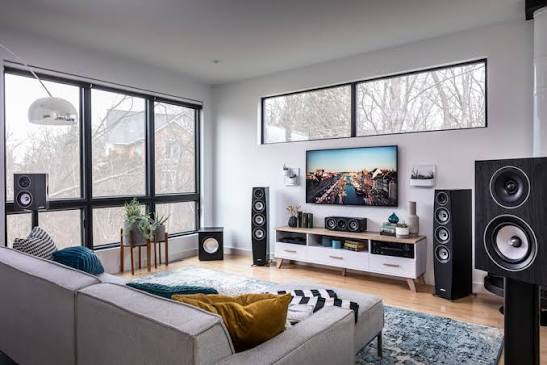
The first digit represents the number of traditional, ear-level audio channels in your setup. A “5” indicates a standard surround sound configuration featuring three front speakers (left, right, and center for crisp dialogue) alongside two side surround speakers. Upgrading to a “7” introduces two additional rear surround speakers. This expands the soundstage, creating a more precise, immersive field of directional audio that accurately tracks movement behind the listener.
The Second Number (.1 or .2)
The second digit dictates the number of dedicated subwoofers handling low-frequency effects (LFE) and deep bass. A “.1” signifies a single subwoofer, which provides that foundational cinematic rumble. Upgrading to “.2” adds a second subwoofer. This is highly recommended for larger AV rooms because multiple subwoofers distribute bass more evenly across the seating area, effectively eliminating acoustic “dead zones” and delivering much smoother, punchier low-end performance.
The Third Number (.2 or .4)
The final digit indicates the number of dedicated height or overhead channels, which are essential for reproducing object-based audio formats like Dolby Atmos. A “.2” means you have two speakers either mounted on the ceiling or firing sound upward to bounce off it. Stepping up to a “.4” configuration uses four height speakers, allowing sound effects—like a helicopter overhead or falling rain—to realistically move from front to back across the ceiling.
Why It’s the Best?
A discrete multi-channel system stands unmatched because it delivers true, physical audio immersion that virtual setups simply cannot replicate. By placing dedicated speakers entirely around the listener, it creates a highly accurate, three-dimensional soundfield. This configuration ensures pristine dialogue clarity, thunderous, localized bass, and a fully customizable environment that brings professional cinema quality directly into your private home theater.
Physical Separation
Physical separation is the secret to an authentic soundstage. Instead of relying on digital algorithms to bounce sound off walls, this system uses distinct, strategically placed speakers to anchor audio to specific locations. When a car speeds across the screen, the sound seamlessly travels from one physical speaker to the next, mirroring the visual movement with flawless, real-world directional accuracy.
The Power of a Center Channel
In film production, up to seventy percent of a movie’s soundtrack—including nearly all spoken dialogue—is mixed exclusively for the center channel. A dedicated center speaker sits directly below or behind your display, locking voices firmly to the screen. This prevents critical dialogue from getting buried underneath roaring sound effects, ensuring every whisper remains perfectly intelligible, even during intense action sequences.
Scalability
Component-based systems offer unparalleled scalability, meaning your audio setup can evolve alongside your budget and technology. You are never locked into a single ecosystem. You can start small with a modest stereo setup, add a subwoofer later, or completely swap out your AV receiver down the road to support new audio formats, protecting your long-term investment without needing a total system replacement.
Best For
Dedicated AV rooms, home theaters, and cinephiles who want the absolute highest audio fidelity.
The Modern Standard: Dolby Atmos-Enabled Soundbars
Not everyone wants to run miles of speaker wire through their walls or fill a room with bulky black boxes. For multi-purpose AV rooms or cleaner aesthetics, high-end soundbars have stepped up significantly.
Modern premium soundbars utilize digital signal processing (DSP) and upward-firing drivers to bounce sound off your ceiling and walls, simulating a multi-channel setup from a single sleek bar.
Why It’s the Best?
Dolby Atmos-enabled soundbars offer the perfect balance of cutting-edge performance and everyday convenience. They leverage advanced acoustic engineering and upward-firing drivers to simulate a complex surround sound environment without the clutter of traditional setups. It is the ultimate solution for movie lovers who want high-quality, immersive spatial audio without sacrificing their room’s design or dealing with complicated wiring.
Minimalist Aesthetic
Modern AV rooms often double as stylish living spaces where bulky equipment can ruin the vibe. A premium soundbar solves this by packing multiple high-performance drivers into a single, low-profile enclosure that sits elegantly beneath your TV or mounts flush to the wall. This sleek design eliminates messy clutter and exposed wires, delivering an uncompromising cinematic experience while preserving the clean, sophisticated look of your home’s interior design.
Plug-and-Play Simplicity
Traditional home theaters require hours of complex routing, calibration, and mapping, but modern soundbars offer effortless plug-and-play simplicity. Most systems connect directly to your display using a single HDMI eARC cable, which instantly handles high-bandwidth audio formats like Dolby Atmos. Setup takes mere minutes out of the box, and because they sync seamlessly with your existing TV remote, day-to-day operation is completely friction-free for the entire family.
Wireless Expansion
While a standalone soundbar sounds great, the real magic happens through wireless expansion. Many top-tier manufacturers allow you to build out a true surround sound network over Wi-Fi without running cables across your floor. You can easily pair a wireless subwoofer to handle deep, room-shaking bass and add discrete wireless rear speakers, giving you an authentic, multi-channel theater bubble with none of the typical installation headaches.
Best For
Multi-purpose living rooms, smaller AV spaces, and users who prefer a sleek, cable-free environment.
The Audiophile Alternative: High-End Stereo (2.1 Setup)
If your audio-video room splits its time equally between watching Hollywood blockbusters and listening to high-fidelity music, a premium 2.1 system (two floor-standing or bookshelf speakers plus a subwoofer) shouldn’t be overlooked.
While you lose the directional “behind-you” effects of surround sound, a high-quality stereo image creates a massive “phantom center” and an incredibly deep, rich soundstage that cheap surround systems can’t match.
Best For
Critical music listeners, acoustic spaces, and those prioritizing pure audio quality over surround sound novelty.
Crucial Factors to Consider Before Buying
To ensure you get the best performance out of your chosen system, keep these architectural and technical details in mind:
Room Size & Layout
Your room’s physical dimensions directly dictate your audio equipment needs. Small spaces under 150 square feet can easily become overwhelmed by too many large speakers, causing muddy sound, making a high-end soundbar or 3.1 system ideal. Conversely, large or open-concept spaces require a discrete AV receiver and larger, multi-channel speakers. These systems pack the necessary power and air-moving capability to cleanly fill the volume of a larger room without distorting.
Acoustic Treatment
Even a top-tier sound system will sound mediocre in a room with bare drywall and hardwood floors. Untreated surfaces cause sound waves to bounce erratically, creating echoes and muddying the audio clarity. Implementing acoustic treatments, such as heavy curtains, plush rugs, or dedicated acoustic foam panels, absorbs these harsh reflections. This simple addition dramatically improves dialogue intelligibility and tightens up the bass, ensuring you hear the mix exactly as intended.
Subwoofer Placement
Low-frequency bass waves are non-directional, but they interact heavily with your room’s physical boundaries. Placing a subwoofer flat against a wall or tucked tightly into a corner can create boomy, distorted bass or leave awkward “dead zones” at your seating position. Experimenting with placement, or upgrading to a dual-subwoofer setup, distributes the low-end energy much more evenly across the room, delivering smooth, hard-hitting bass to every single seat.
Final Verdict: Which One Should You Choose?
- Choose a 5.1.2 or 7.1.4 Component System if you have a dedicated room, want the ultimate movie-watching experience, and don’t mind the installation process.
- Choose a Wireless Surround Soundbar System if you want 90% of the performance with 10% of the setup hassle.
- Choose a 2.1 Audiophile Setup if your AV room doubles as a music lounge and you value pristine tonal accuracy over surround sound tracking.